“Being an excellent scientist and doing excellent research is essential, but it is not enough for a grant like the ERC. Writing proposals is almost a science in itself. In just a few pages, you have to convince a panel that out of all the projects they have read, yours deserves one or two and a half million euros, depending on which ERC scheme you’re applying for.”
Author: Djordje Petrović
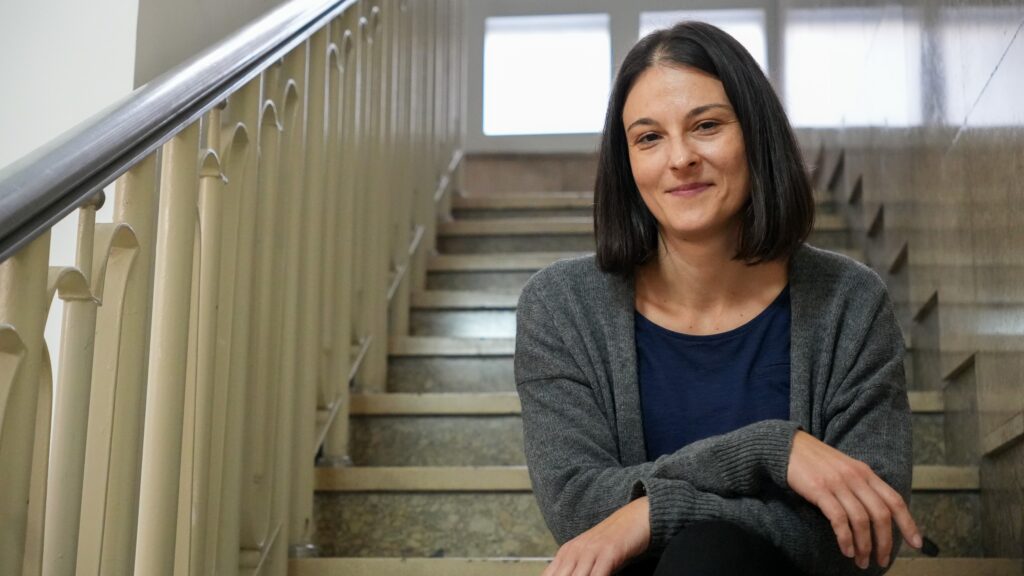
Although, as a child, she dreamed of becoming a stuntwoman, the magnificent starry skies above the Croatian island of Mljet, where she spent her summer holidays as a high school student, completely captivated Dr. Vernesa Smolčić and awakened countless questions within her. “I loved looking at the stars at night and thinking about how everything began, where it all started, why the universe is so vast, what the difference is between all those tiny dots in the sky, which ones are stars and which are planets.”
She eventually decided to study physics in Zagreb, but after meeting the well-known astronomer and “asteroid hunter” Korado Korlević in Višnjan, Istria, nothing would ever be the same again. He showed her “that everything is about creativity, that not even the sky is the limit, and that the right approach to everything in life – including science – is simply to play, and then keep moving forward through play.” Later, during a stay at Princeton, when she also learned programming, Professor Smolčić fell irreversibly in love with astrophysics and decided to devote her life to the field.
She earned her PhD at the University of Heidelberg and later continued her research training at the renowned Caltech Institute in the United States, the Institute for Astronomy in Bonn, and the European Southern Observatory in Garching, Germany. She eventually returned to her hometown and is today a full professor at the Faculty of Science, University of Zagreb.
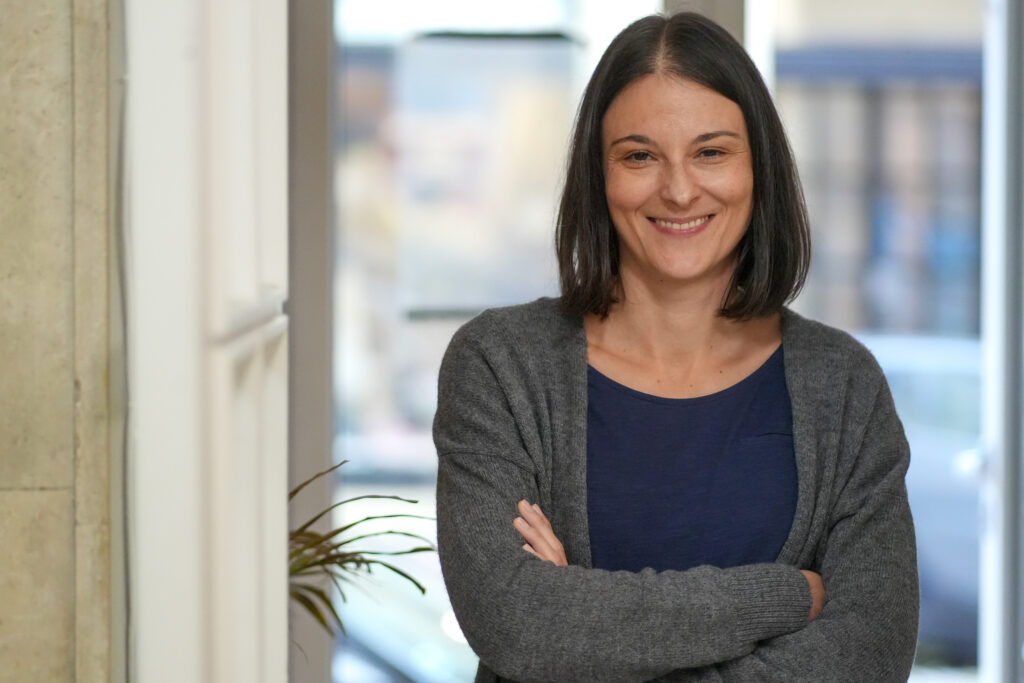
Professor Smolčić studies galaxy evolution and is one of the leading authors in her field. In 2013, she received a prestigious European Research Council (ERC) grant worth €1.5 million for a project involving pioneering research in extragalactic radio astronomy, becoming the first female scientist in Croatia to achieve this distinction. The project was later selected among the 15 ERC projects that transformed European science.
We spoke with Professor Smolčić about her work and the research that earned her the ERC grant, what it is like to be an astrophysicist and lead such a large-scale project.
You often emphasize that science should, in a certain sense, feel like play for a researcher, and that it is an inherently creative activity. At the same time, researchers today face enormous pressures. Even if they succeed in securing funding after intense competition, they still have to meet countless deadlines and administrative requirements and ultimately deliver strong scientific results. How do you balance those two sides of scientific work?
It’s not easy, especially in today’s highly competitive world. Once something becomes your “job,” it can be difficult to preserve your love for it, and I think it’s essential that people truly love what they do. Because if you don’t deeply love your work, all those “steps” you have to climb in order to secure a project or a position at an institute – all the obligations and results you have to deliver – can eventually lead to burnout.
Fortunately, I genuinely love what I do, and what especially matters to me is that my work is creative. That may sound counterintuitive to people outside science, because science is not always perceived as creative, but it absolutely is. You are faced with a problem, with a question that needs answering, and the path toward that answer is entirely your own. To me, it really feels like play – like someone building a house out of LEGO bricks without knowing exactly how it will look in the end. (laughs)
I also love learning new things. Once I reach a certain level in something, I start getting a bit bored and need to move on to a new challenge. Throughout my scientific journey – toward a permanent faculty position or toward winning the ERC grant – there was always something new and exciting to learn. For example, during the first year of my PhD, I focused on mastering the advanced methods and tools used in my field and learning how to program so I could perform complex calculations. Later, toward the end of my PhD and during the first part of my postdoctoral work, I dedicated myself to learning the “language” of telescope-time applications, because obtaining observing time is extremely competitive. And of course, early on I also had to learn the language of scientific papers.
Everything comes down to communication. And all of these are different languages: programming languages, the language of writing papers, the language of telescope-time proposals, the language of grant applications and funding proposals. I found it fascinating to learn how to write in all of those different languages. How to adapt the same idea, for example, into the style appropriate for a scientific paper or into the style suited for a committee deciding whether I should receive telescope time or project funding.
Public speaking was also a major challenge for me because I’m naturally reserved and don’t enjoy being the center of attention, but I think I’ve improved tremendously. When I look back at myself in the early stages of my career, it’s a complete 180-degree difference compared to who I am now. Project leadership, group management, time management – those came later, and there was a lot to learn from people in the private sector. At that stage in my career, I actively sought out workshops, seminars, and courses, like the one organized by your Center for the Promotion of Science, where I could develop those kinds of skills.
Creativity and a love of learning are things I’ve always enjoyed. They’re what kept me from burning out and helped me carry the weight of all those responsibilities.
What does it actually look like to study galaxies?
I work in observational astrophysics, which means that, as part of large international scientific teams, I conduct sky surveys using radio telescopes. These collaborations usually involve around one or two hundred researchers, all observing a specific region of the sky with professional telescopes, for which observing time has to be competitively secured.
For example, one survey I worked on – called COSMOS, and the basis of my PhD research – contains several million galaxies. Over the past twenty years, this region of the sky has been observed with numerous telescopes, including the James Webb Space Telescope. We observe the same patch of sky across different wavelengths, from X-rays and optical light to radio waves, in order to detect everything that can possibly be detected in that region.
So, for instance, we may detect several million galaxies in the optical and infrared range, but only around ten thousand in the radio range. We then combine all of those datasets so that for every galaxy we have information from the optical range, where we see stars; the infrared range, where we see dust; and the radio range, where we detect the aftermath of exploded supernovae and jets produced by supermassive black holes, and so on.
Once all those data are processed – which takes years and years of work – the result is an enormous database. Only then can you start asking questions such as: how does the radio emission produced around supermassive black holes affect star formation in the galaxies that host those black holes?
At that point you have to become creative and figure out how to answer the question. That always involves a great deal of programming in order to process the data and later transform them into graphs from which we can extract meaningful information.
About a decade ago, you received an ERC grant, and your project was later selected among the 15 ERC projects that transformed European science. Could you tell us more about the research itself and why its results were so important?
The project focused on galaxy evolution – specifically, how stellar mass grows throughout cosmic history and how supermassive black holes grow inside galaxies.
One of the project’s major advantages was that it relied on entirely new radio observations at a time when radio telescopes had undergone a major technological upgrade. These new instruments were about ten times more powerful than their predecessors, meaning they could provide up to ten times more information about the universe.
Together with collaborators from Croatia and abroad, I managed to secure around a thousand hours of observing time on different telescopes, which is truly enormous. On the Very Large Array in New Mexico – the telescope featured in the movie Contact – we had almost 400 hours of observing time.
Importantly, this was one of the first projects to use these upgraded telescopes, at a moment when there wasn’t even a standardized way of processing the data yet. One of the biggest challenges was simply turning the raw data from those upgraded antennas into final images – images that then had to be tested in extreme detail to ensure that every piece of information extracted from them was reliable.
It took my team several years to transform those telescope data into a final sky map and a catalog of galaxies in that region of the sky. We later made the catalog publicly available so that scientists around the world could use it for further research. For us, it also enabled an unprecedentedly deep radio view into the distant universe.
One of the project’s most important results, for example, was the discovery that galaxies in the early universe were forming more stars than previously thought – by roughly twenty percent. To uncover that, we needed observations in the radio range because radio wavelengths provide a direct view of star formation in the early universe.
Before that, our understanding of the early universe relied mainly on ultraviolet observations, but ultraviolet light is heavily affected by cosmic dust. In other words, if a galaxy contains dust and you don’t account for it, ultraviolet observations can lead to inaccurate conclusions. Radio waves, on the other hand, can essentially see straight through the dust.
You mentioned collaborators from Croatia as well as from abroad. Even with the financial support provided by an ERC grant, many scientists say it is extremely difficult to build a strong international team when conducting research in our part of Europe. How did you manage it?
Honestly, that was probably my biggest fear – that I wouldn’t be able to build a team, because at that time almost nobody in Zagreb was working in that branch of physics.
What certainly helped was the fact that it was an ERC grant, which meant I could offer competitive EU-level salaries to postdoctoral researchers. Another important factor was that before the ERC, I had received a smaller project grant – a Marie Curie Career Integration Grant (CIG) – which I could use, among other things, for travel.
I used that smaller grant to travel extensively to conferences and institutes and actively recruit people. I even asked colleagues to advertise the open positions in Zagreb during their own conference presentations.
For example, I met one of my future postdocs while visiting an institute in Australia, and it turned out that her dissertation aligned perfectly with the work required for my project. So I immediately approached her and asked whether she might be interested. Since she wasn’t sure whether she could imagine living in Croatia, I invited her to visit us for a week.
She had been living in Perth – that beautiful part of Australia where there’s probably only one bad-weather week per year. She came to Zagreb in January, and the weather was absolutely awful. It rained, snowed, and the skies were completely gray, but despite that she ended up loving Zagreb and the people here, so she accepted the position.
Recruiting people was truly an active and demanding process, but in the end it was successful and contributed greatly to the overall success of the project.
What is it like to lead such an expensive and complex project – one that involves enormous responsibility and high expectations from both the scientific community and the public?
Stressful, in one word. (laughs)
One of the things that helped me enormously were courses and workshops like the one you organized here. It always seemed somewhat absurd to me that university professors are often expected to be good teachers without having any formal education in pedagogy, psychology, or didactics. The same applies to project leadership, time management, and similar skills. Those are not things that simply fall from the sky – they have to be learned and developed.
Fortunately, I realized that relatively early in my career, so whenever I came across a course or workshop of that kind, I wanted to participate. I was always looking for opportunities to improve those skills as well.
At one point, while I was in Germany, the Bosch Foundation – yes, the one connected to the home appliances company – organized a seminar where we learned skills such as team leadership, media communication, conflict resolution, and presentation techniques.
The workshops were extraordinarily well organized, and interestingly, the lecturers were not scientists at all. They came from the private sector. Much of the presentation training was actually led by professional actors.
What I learned there helped me tremendously in managing teams, resolving conflicts, interacting with people, and motivating them. Even if some of those things come naturally to you, workshops like that give you confidence that you’re approaching things in the right way, and that definitely reduces stress.
What advice would you give young researchers about writing strong project proposals – and about coping with rejection if their projects are not funded?
First of all, you should never become discouraged, because success does not exist without failure. When you experience failure for the first time, you can either give up or learn from it, improve what needs improving, and try again.
That was certainly true in my case. So many of my applications were rejected throughout my career – and not just mine. That’s simply how it is; you cannot succeed every single time. Even after receiving an ERC grant, not everything automatically gets approved. We are all human, including the members of evaluation panels. Failure is something we have to accept as part of the job.
What’s important is not to lose momentum after a rejection, especially because grant applications usually come with detailed feedback from the committee explaining what could be improved next time.
Second, being an excellent scientist and doing excellent research is essential, but it is not enough for a grant like the ERC. Writing proposals is almost a science in itself. In just a few pages, you have to convince a panel that out of all the projects they have read, yours deserves one or two and a half million euros, depending on which ERC scheme you’re applying for.
And that’s difficult because the panel includes both absolute experts in your field and scientists from neighboring disciplines who are not specialists in your exact area. For example, someone who studies stars might evaluate my project on galaxy evolution. They are still experts, of course, but not in your precise subfield, and you cannot communicate with them in the same way you would with a colleague who works on exactly the same topic as you do.
Structuring and writing a strong proposal is fundamentally about communication, and that too is a skill that must be practiced and learned. Very few people write a perfect proposal on their first attempt. That’s why it’s important to rely on senior colleagues with more experience and also attend workshops and courses focused on grant writing.
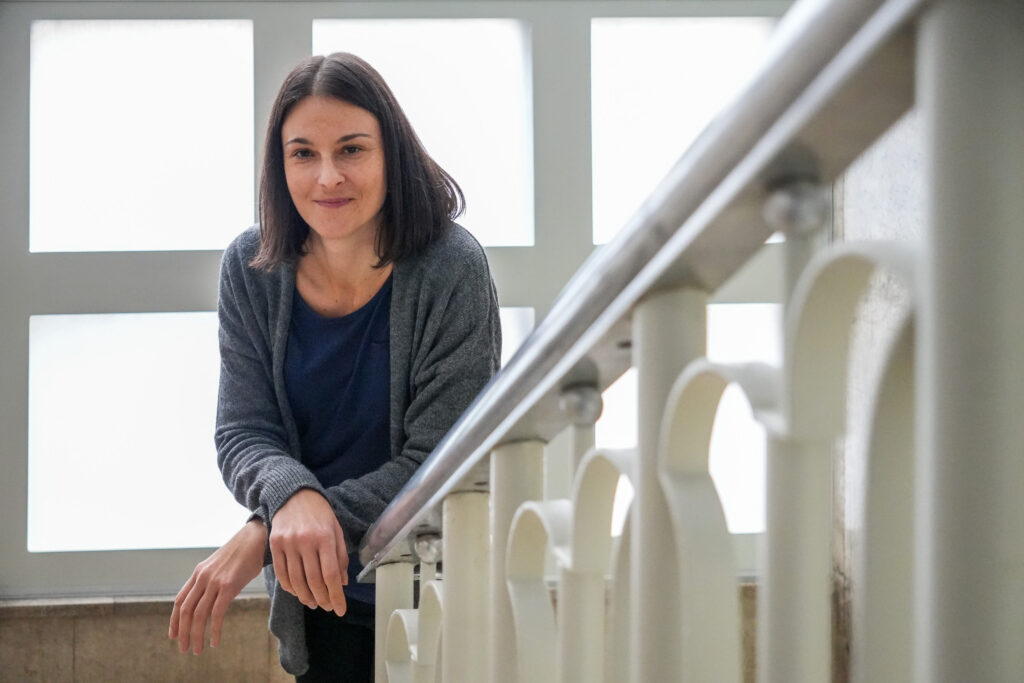
Photo: Marko Risović
This interview was originally published in Issue 35 of Elements magazine (CPN).