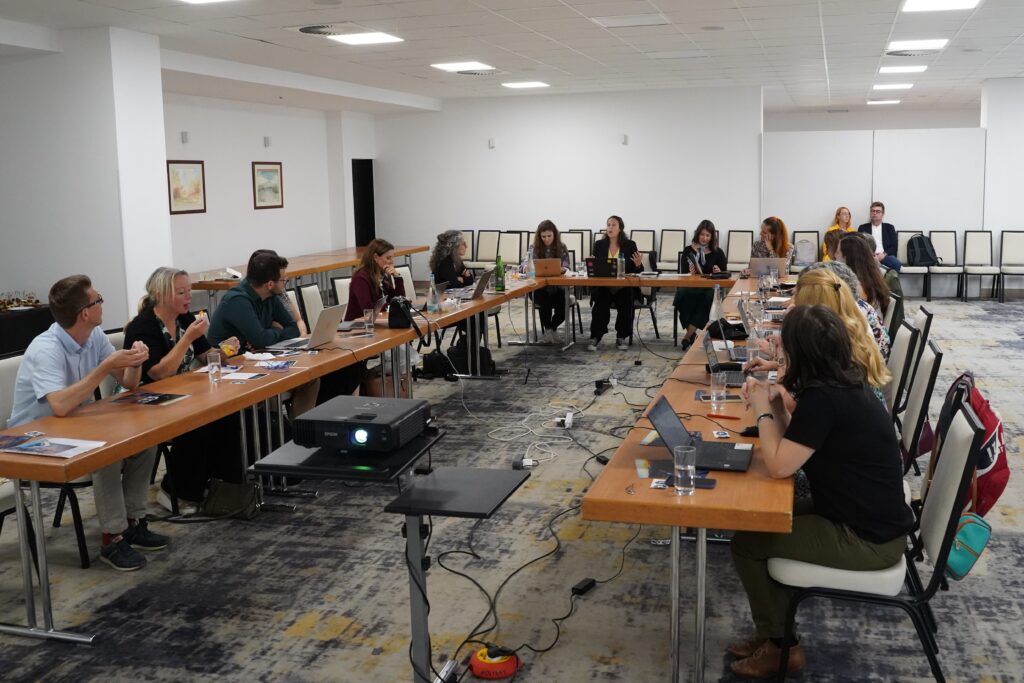

Initial findings from the Maturity Mapping process reveal a diverse landscape of institutional readiness, identify foundational strengths in working conditions alongside critical gaps in career stability, mobility, and interoperability.
The SECURE2 project has completed its first major milestone: a comprehensive baseline assessment of research career policies and practices across its pilot institutions. Conducted through a harmonised self‑assessment process, the maturity mapping provided an empirical foundation for designing differentiated support measures and monitoring progress over the project’s four‑year implementation phase.
The eight pilot organisations are spanning a broad geographical and institutional spectrum – seven research performing (five universities, two institutes) and one research funding organization. Each completed a standardised maturity template assessing eight action areas aligned with the Research Career Framework: Strategy, Stability, Working Conditions, Skills Development, Mobility, Assessment, Career Pathways, and Interoperability. Scores were assigned on a scale from 0 (“Not started”) to 4 (“Leading”), enabling both intra‑institutional profiling and cross‑pilot comparison.
Consortium‑Wide Findings, Key Strengths and Systemic Gaps
The collected results place the consortium at an overall maturity level between 1 and 2 – “Initiating” and “Developing” stages. However, this average masks substantial variation across pilots, since some of them already demonstrate established or near‑established policies in several action areas.
The assessment identifies Working Conditions as the consortium’s strongest domain. This reflects well‑established HR frameworks, contractual clarity, and supportive national regulations that provide a stable platform for further reforms. Strategy, Skills Development, Assessment, and Career Pathways show early‑to‑developing progress, indicating growing institutional awareness and initial structural efforts.
On the other hand, three action areas register as significant systemic weaknesses: Stability signals an almost universal absence of long‑term career structures, tenure‑like pathways, and predictable progression mechanisms. Mobility reveals insufficient opportunities for cross‑border and intersectoral researcher exchange, limiting the free circulation of talent. Interoperability points to weak alignment with European frameworks such as the ERA, CoARA, and the ERA Talent Platform, hindering the recognition of career stages and competencies across institutional and national boundaries.
Implications for Further Work
The maturity baseline serves as a strategic tool for the consortium. It confirms the necessity of a differentiated support model: advanced pilots can act as peer‑learning leaders, mid‑range institutions require structured capacity‑building to consolidate reforms, and early‑stage pilots will benefit from foundational templates and hands‑on mentoring.
Priority interventions in SECURE2 will concentrate on the weakest action areas – Stability, Mobility, and Interoperability, while leveraging the robust Working Conditions already present across pilots. The findings also underscore the importance of aligning institutional reforms with broader European Research Area (ERA) objectives, including responsible research assessment (CoARA) and Open Science practices.Over the coming months, SECURE2 will translate these diagnostic insights into tailored implementation schemes, capacity‑building activities, and policy alignment efforts. By systematically strengthening research career structures across a diverse set of European institutions, the project aims to contribute to a more sustainable, transparent, and interconnected research ecosystem.